
| Year | 2025 |
| Category | Telluric rhapsody |
| Work | INFERNO. Cants I, II, III ( The Divine Comedy) |
| Author | Dante Alighieri |
| Premiere | Fira Tàrrega |
This premiere of telluric rhapsody is the result of a process of stylization that has gradually taken shape in various non-conventional performance spaces: the underground level of the Institut del Teatre in Barcelona, the second basement floor of a large parking lot in the city of Vic, and, finally, the cemetery of Torelló, within the framework of the Festus Festival.
At FiraTàrrega 2025, Chants I, II, and III were presented as an initiation into the journey to hell, and for the first time in their stage version.
The rhapsode’s recitation, delivered in Tuscan, is accompanied by orientative phrases that guide the narrative thread of the piece. Instead of a literal translation, the more than 130 verses of each chant have been condensed into around twenty sentences projected during the performance.
Regarding the stage language, the punctuation of Dante’s text has been meticulously respected. However, in this premiere, Albert introduces, in addition to the well-known teluric chants, a new modality he calls single-frequency chants, together with an innovative concept of achronic gestuality.
This atemporal gestuality seeks to express the anagogic content —that is, the spiritual and symbolic meaning— of Dante’s Inferno verses. The proposal invites the audience to take part in the creation of a spontaneous and creative choir —a manifestation of collective sonic intelligence that transforms the performance into a shared and sensorial experience.
All of this is the outcome of research carried out by the Laboratory of Telluric Art, founded by Albert in the 1990s, devoted to exploring the relationships between body, sound, space, and energy.
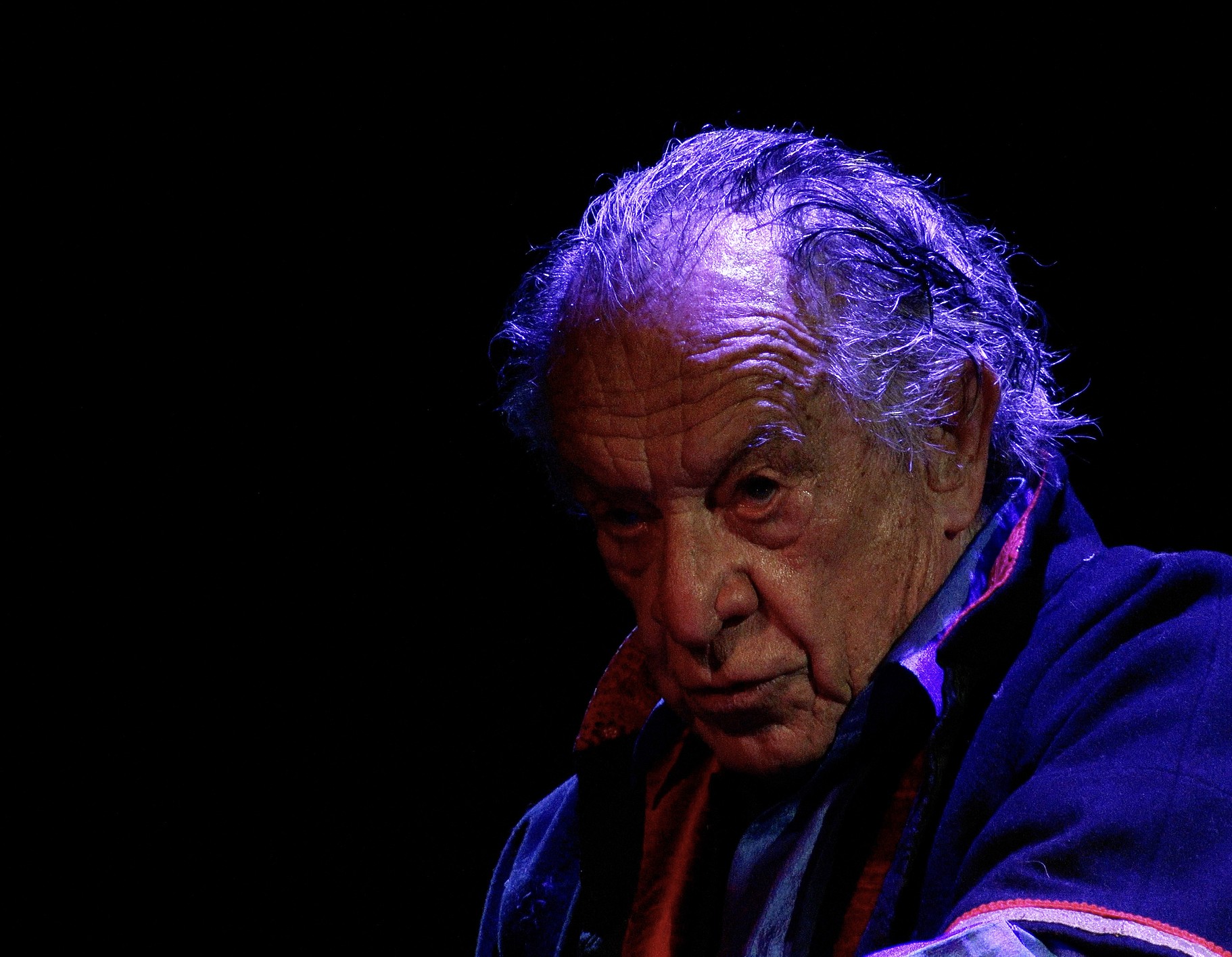
Photograph by Noé Vidal
ARTISTIC DATA SHEET
AUTHOR Dante Alighieri
DIRECTOR Albert Vidal
MUSIC AND COREOGRAPHY Albert Vidal
RHAPSODE Albert Vidal
THE MASK OF THE MAN WITHOUT NAME Joan Petit
REBAB Ricard Vallina
MUSIC AND COREOGRAPHY Albert Vidal
LIGHTING DESIGN Pep Barcons
SOUND SPACE Denys Sanz
COSTUME Oghi Ochir
VIDEO EN 3D Jordi Pérez
CAMERA AND PHOTOGRAPHS Noé Vidal
MANAGEMENT Cristina Vilaró
REVIEWS
ALBERT VIDAL AT THE GATES OF HELL
“Nel mezzo del cammin di nostra vita / mi ritrovai per una selva oscura / ché la diritta via era smarrita”
Within Fira Tàrrega, the La Paraula space —in Plaça dels Comediants— has become established as a refuge for reflection and poetry. Josep Pedrals and Xavi Lloses (El batec) brought rhapsody there; Núria Martínez Vernís and Oriol Sauleda (El gran bluf) presented a cacophonous and challenging intersection of impassioned discourses under the protection of Saint Improvisation. | Albert
Vidal, the catabasis, with his Inferno. It is this latter performance that we will focus on here.
Albert Vidal is a long-standing heterodox artist, a historical nonconformist —yet always at the forefront—, with studies in Topeng dance in Bali, Butoh in Japan and Bori possession in Niger. Mime artist, bard, actor, creator and theatrical re-creator, he has established precedents in the fields of performance, installation and visual theatre.
In L’home urbà (The Urban Man) (1983), he portrayed a citizen on display —and in action— inside the chimpanzee enclosure at Barcelona Zoo, where a plaque identified the urban variety of the human specimen. And in 1987 he carried out Exposició viva de 40 personatges (Living Exhibition of 40Characters) at Galeria Metrònom: a live exhibition of citizens who stood, each on their own pedestal, as anonymous representatives of their respective professions; the intervention, presented as an “anthropological action and metaphysical sardana”, was included in the collective exhibition Acció. (Action. A Provisional History of the 90s) (MACBA, 2020).

Photograph by Noé Vidal
A TUSCAN RHAPSODY
His Inferno is a telluric rhapsody, within the uninterrupted line of research he has been pursuing since the 1990s, when he founded or patented the Laboratory of Telluric Art, from where he continues researching and creating throughout the world. The rhapsode recites the first three cantos of Dante Alighieri’s Divine Comedy in the original 14th-century Tuscan language —Vidal masters Italian: he worked as a permanent actor with Dario Fo’s Company in Milan. Alone, in the middle of a bare space, he makes his way through it with a powerful voice and a firmly expressive gesture.
He performs all the roles: Dante, Virgil, Beatrice. The surtitles do not serve to translate the text spoken by the actor; instead, they provide summaries of the cantos and situations, allowing us to enjoy the physical and vocal work.
The first canto, which functions as a prologue to Dante’s work, places the poet lost in a “selva selvaggia e aspra e forte” (“a savage, harsh and impenetrable forest”), a symbol of spiritual confusion, personal crisis and the loss of moral direction. Dressed in the rays of the planet, he prepares to climb a mountain, but three beasts —a spotted-skinned panther, a hungry lion and a lean she-wolf, corresponding to the vices of incontinence, the thirst for power and envy—drive him back, down the hill. Fallen once again into the forest, the shadow of Virgil appears to him —“Non omo, omo già fui” (“No man, man I once was”)—, who presents himself as a son of Lombardy —an anachronistic term—. The poet sang of the deeds of Aeneas, the founder of Rome, capital of the world and Apostolic See —through syncretism, the pagan city of the “dèi falsi e bugiardi” (“false and lying gods”) is linked with that of the papal mantle—, and he will guide Dante through Hell. The rhapsode prepares to relive the experience. In Tàrrega, the wind moves the curtains of the La Paraula theatre.
In the second canto, the preface to the infernal poem, Dante feels unworthy of descending into the underworld, and for this reason he invokes the Muses and other divine beings. Virgil —“anima cortese mantoana” (“noble Mantuan soul”)— explains that he has come to save him because Beatrice, “beata e bella” (“blessed and beautiful”) —Vidal scans the verse—, asked him to help; upon her, a divine creature —“fatta da Dio” (“made by God”)—, the flames of the fire have no effect.
Aeneas and Saint Paul, among others, were able to visit the realm of the dead while still alive. Dante’s journey too, which Christianises the classical legacy through his account of the afterlife, responds to a providential design.
FROM THE PRE-INFERNO TO THE HERE AND NOW
In the third canto, Dante and Virgil find themselves before the gate of Hell. The rhapsode utters the famous words inscribed upon the gate.
The actor reacts with his entire body —burdened by the beams of light as if they were malevolent forces— to the unarticulated cries, false gasps, sighs and laments which, without becoming strident or invasive, create an accurate atmospheric effect.
In the pre-Inferno —not even Hell wants them— are the sad souls of the undecided. They never took sides, and they have descended submerged in anonymity.
They have been unable to choose between good and evil —a choice that is obligatory from a theological point of view— and they have been left chasing a piece of cloth. The projection of a skull-mask surrounded by an undefined swarm, with a loud and penetrating buzzing sound, refers back to the punishment inflicted upon cowards: running naked, tormented by horseflies and wasps. The political reading is evident here and now.
Then, on the banks of the Acheron, they see how the fearsome ferryman gathers the sinners —“anime prave” (“depraved souls”)— who have no fear of God. In the next canto, Dante will be on the other shore, but Albert Vidal will no longer recite that part for us.
With this Inferno, which recreates the beginning of Dante’s descent into Hell, the reciter takes us on a journey to the foundations of Western culture. The work is a true triumph of the word, gesture and the performative power of the voice. At times, the rhapsode-actor is someone who moves forward stumbling and struggling; at others, he appears stretched by the joy of revelation.
He also shows himself frightened, compassionate, sorrowful, overwhelmed by sleep.
After the applause, Vidal invited the audience in Tàrrega to join him in a telluric chant, guiding his voice “like the flight of starlings”. The action can be read as a call for critical commitment or as a spell against cowardice through the power of imagination.“Inferno constitutes a true triumph of the word, gesture and the performative power of the voice
Ana Prieto, 21/09/2025
RECOMANA Revista digital
AN INTIMATE AND MASTERFUL JOURNEY INTO DANTE’S HELL
Albert Vidal premieres an unclassifiable, hypnotic and magical show at FiraTàrrega.

Albert Vidal, on a journey to Dante’s Hell. NURIA BOLEDA / FIRATÀRREGA
And we shouted like sinners in hell.
Spurred on by Albert Vidal, transformed into Dante, and after a sincere and enthusiastic applause, the audience engaged in an exercise of collective intelligence in a song—modulated by the maestro—that ended with a liberating and excited cry that even knocked him to the ground. It was a fantastic culmination of the journey through the first three cantos of the‘Hell of Dante Alighieri, led by a superb rhapsodist possessed by the words of the Tuscan writer.
This is a proposal that premiered on Friday at a FiraTàrrega that looks to the future as an international market for the performing arts what is it. Inferno It is a proposal as unclassifiable as the rest of those that, over the years, almost fifty years ago – we discovered it with the performance The appetizer— , has given birth to the great master of voice and movement.
A disciple of Jacques Lecoq, Dario Fo and by Kazuo Ohno, a researcher in the mountains of India and the steppes of Mongolia, Albert Vidal, who has spent five years penetrating the universe of Dante, transforms the poet’s journey into a hypnotic choreography, underscored by the tremendous expressiveness of the word in a face that explores the poet’s fear and pain.
The first parts of the work are in the poet’s original language, Tuscan. When the poem enters the limbo of all those who have been unable to react to evil, we think of Gaza and so many of today’s politicians. An indicative subtitleguides us throughout, but the most inexplicable thing is the magic of the rhapsodist, with a wardrobe as elegant as it is infernal. –by Oghi Ochir– and Pep Bracons’ atmospheric lighting design that captivates and guides us along the journey…
Santi Fondevila, 14/09/2025
ARA
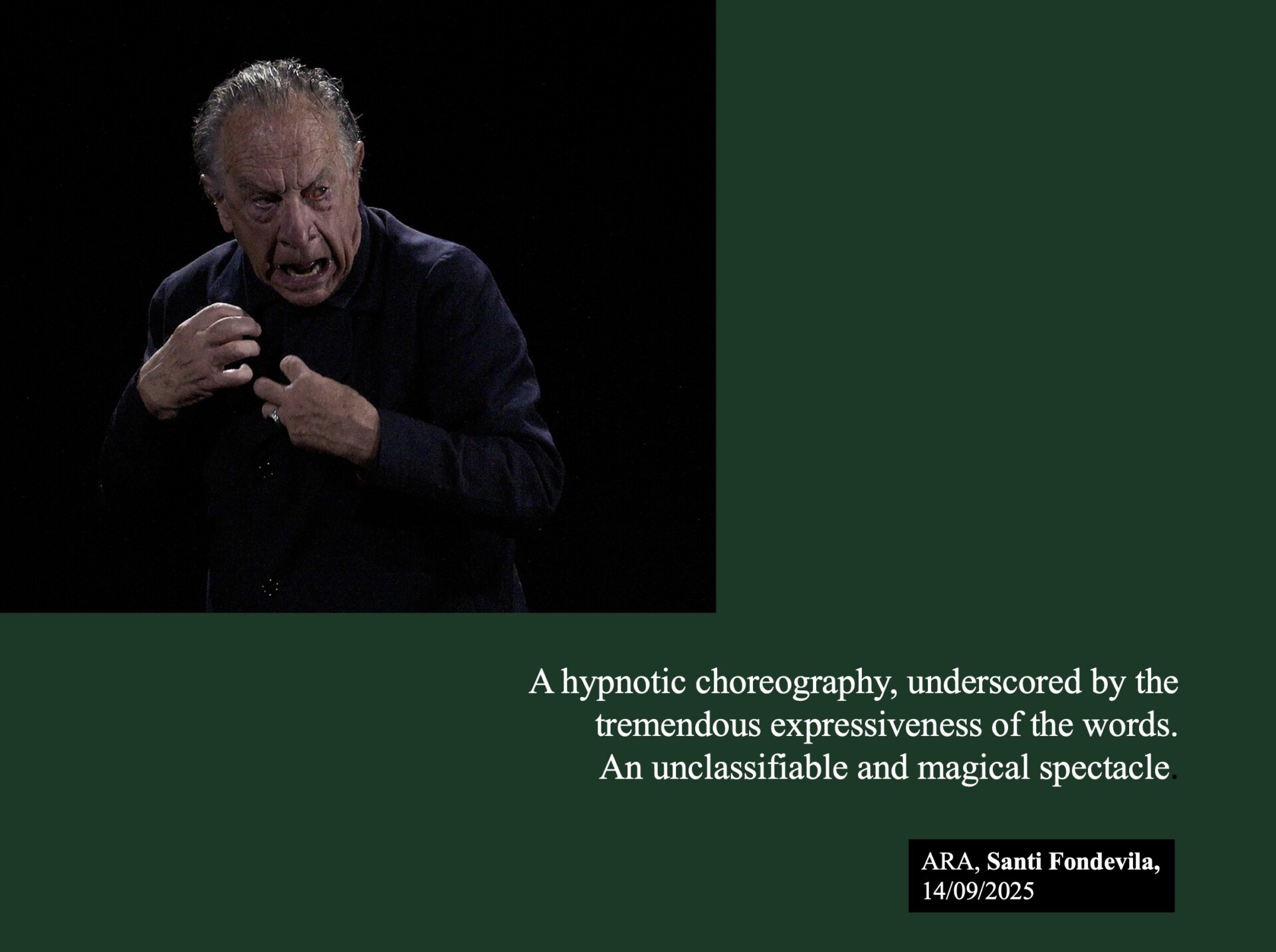
Photograph by Noé Vidal

Photograph by Noé Vidal
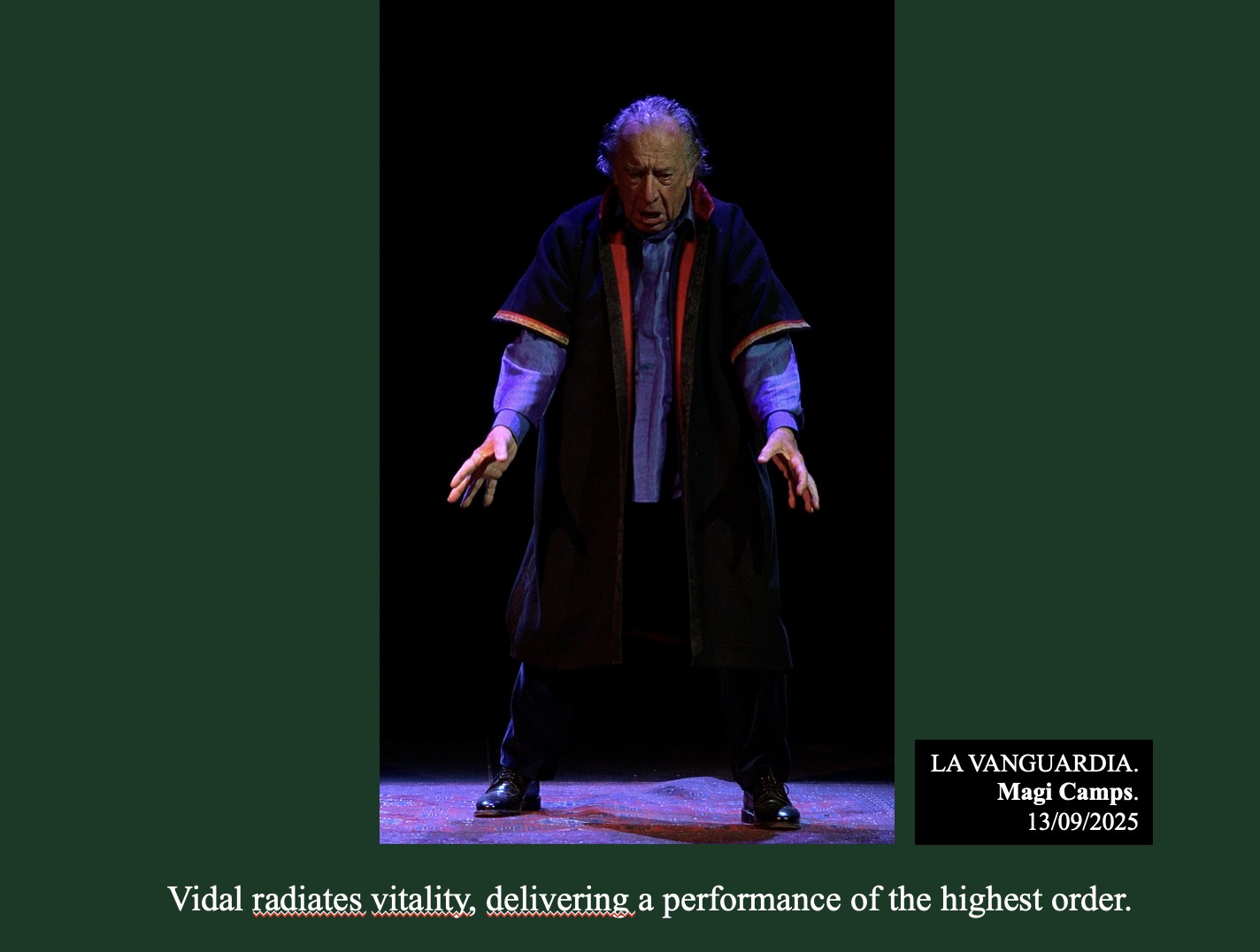
Photograph by Noé Vidal
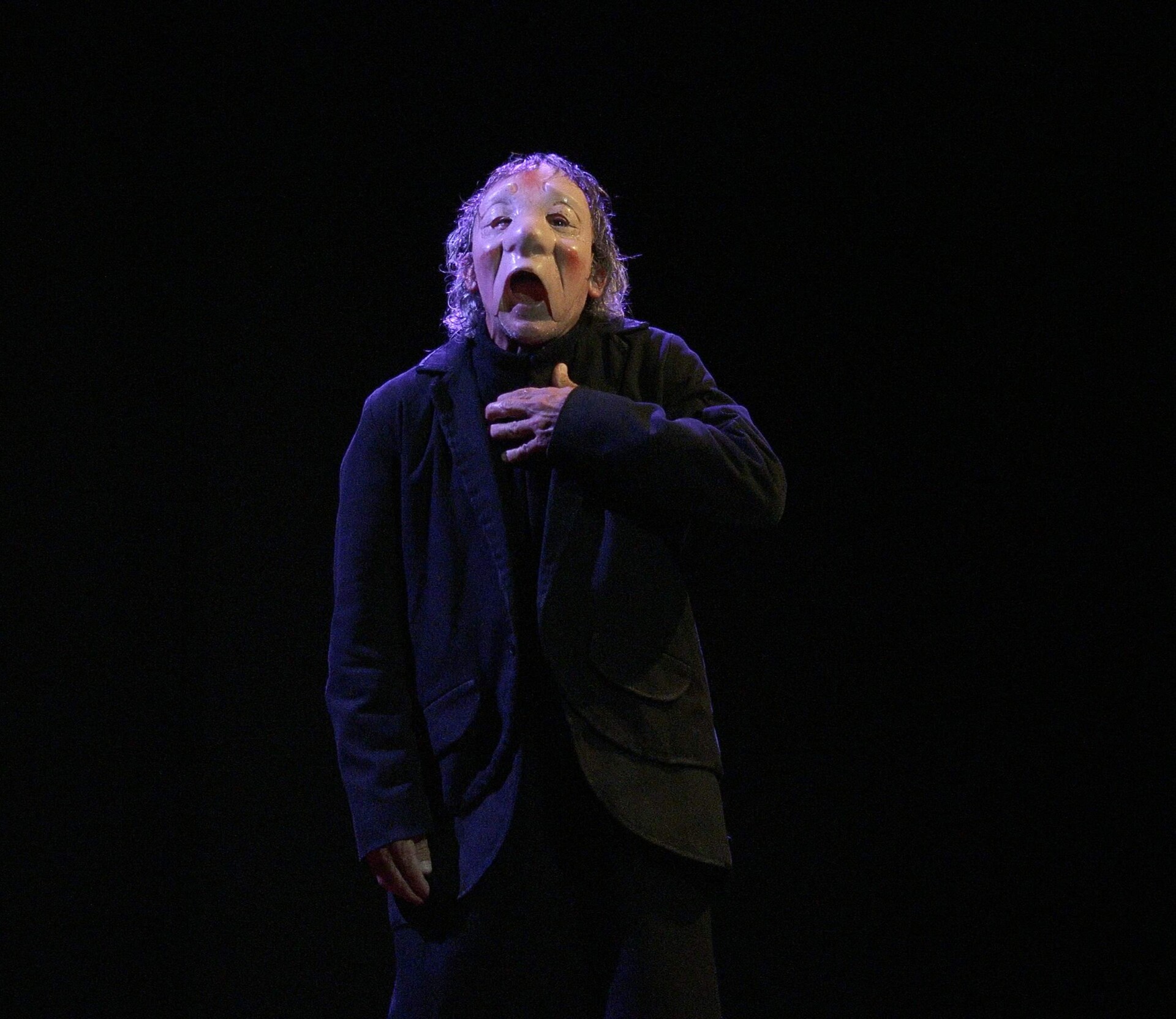
The mask of the man without a name: Joan Petit
Photograph by Noé Vidal
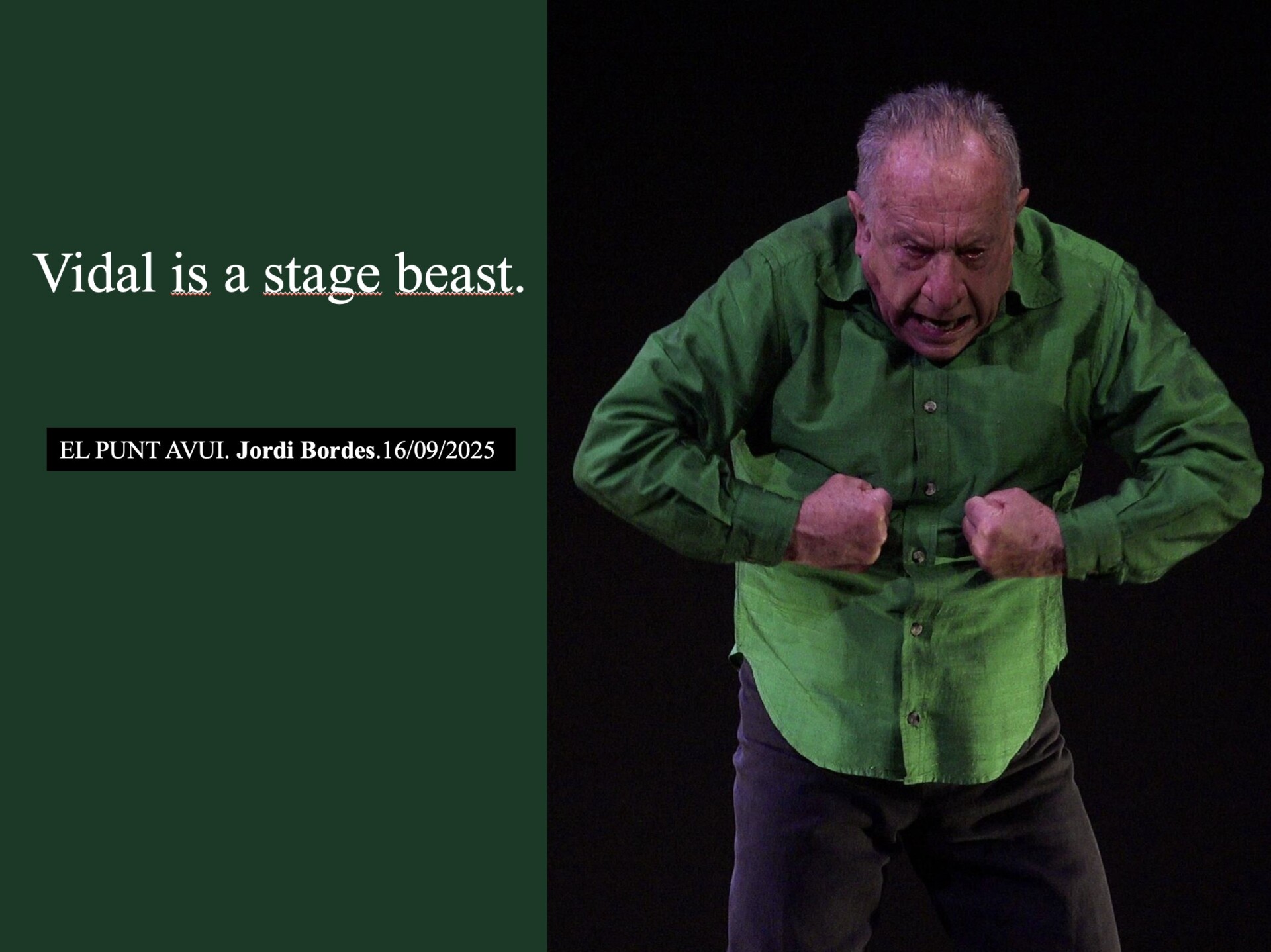
Photograph by Noé Vidal
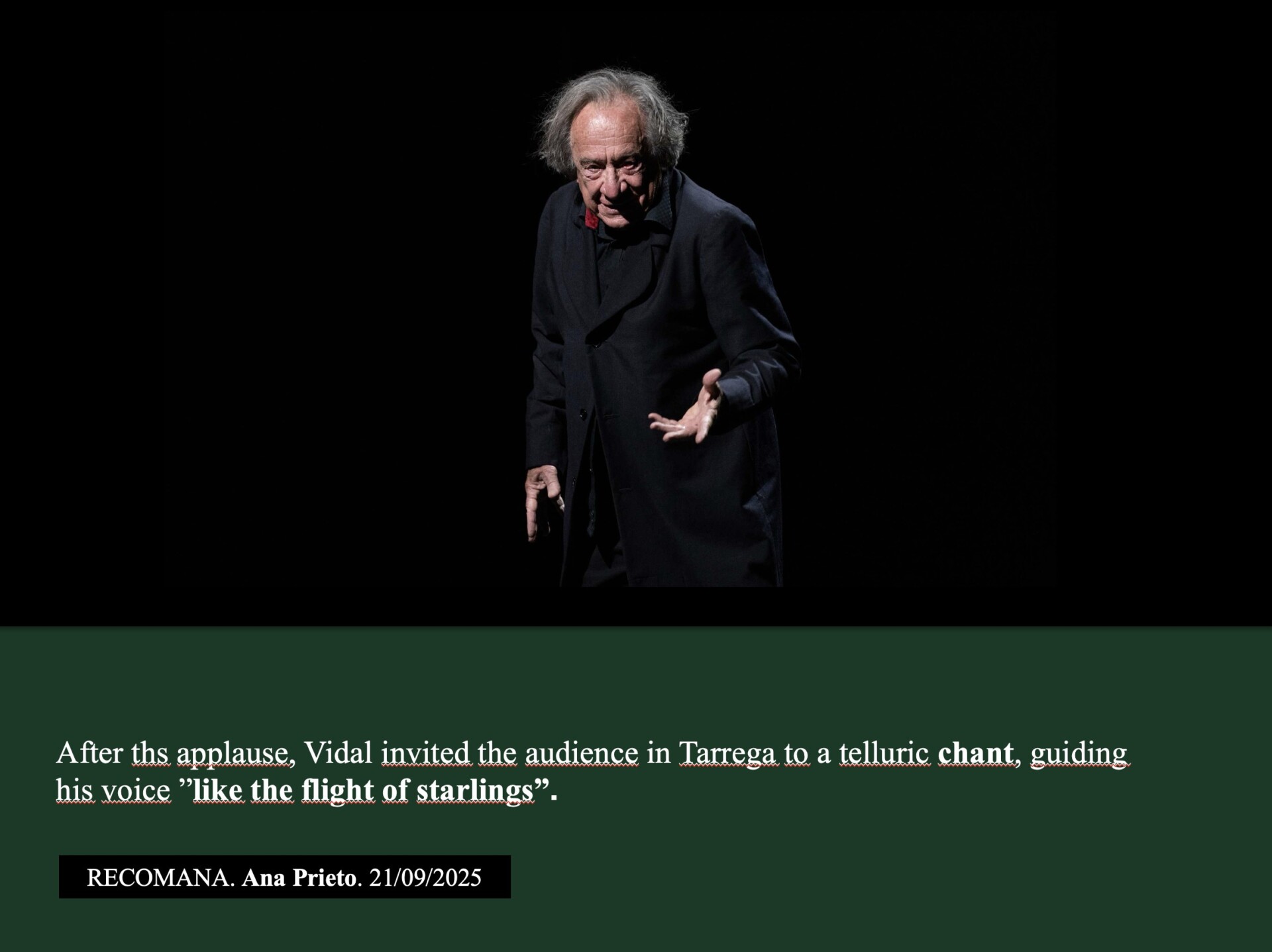
Photograph by Núria Boleda